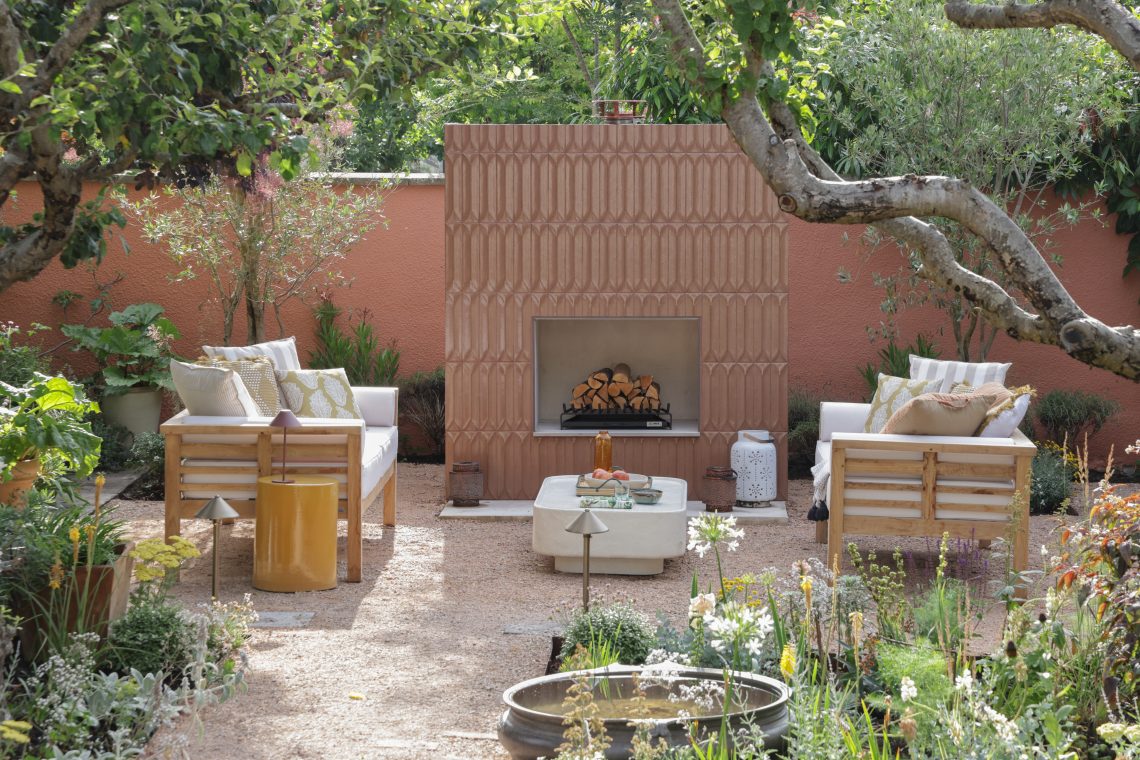
At Woodhouse & Law, indoor and outdoor spaces are conceived as one cohesive story – and it changes the way you experience both.
There’s a moment that most of us have felt, stepping into a beautifully designed home where the garden catches your eye through the glass and you realise, it all belongs together. The colours, the mood, the sense of ease. Nothing jars. Nothing feels like an afterthought. That feeling isn’t accidental. It’s the result of someone thinking about your home and garden as a single, unified whole, rather than two entirely separate projects.
It’s exactly this philosophy that sits at the heart of Woodhouse & Law, the multidisciplinary design studio founded by garden designer Nick Woodhouse and interior designer John Law. Since coming together in 2009, the pair have been quietly dismantling the traditional boundary between the inside and outside of a home, and the results speak for themselves.
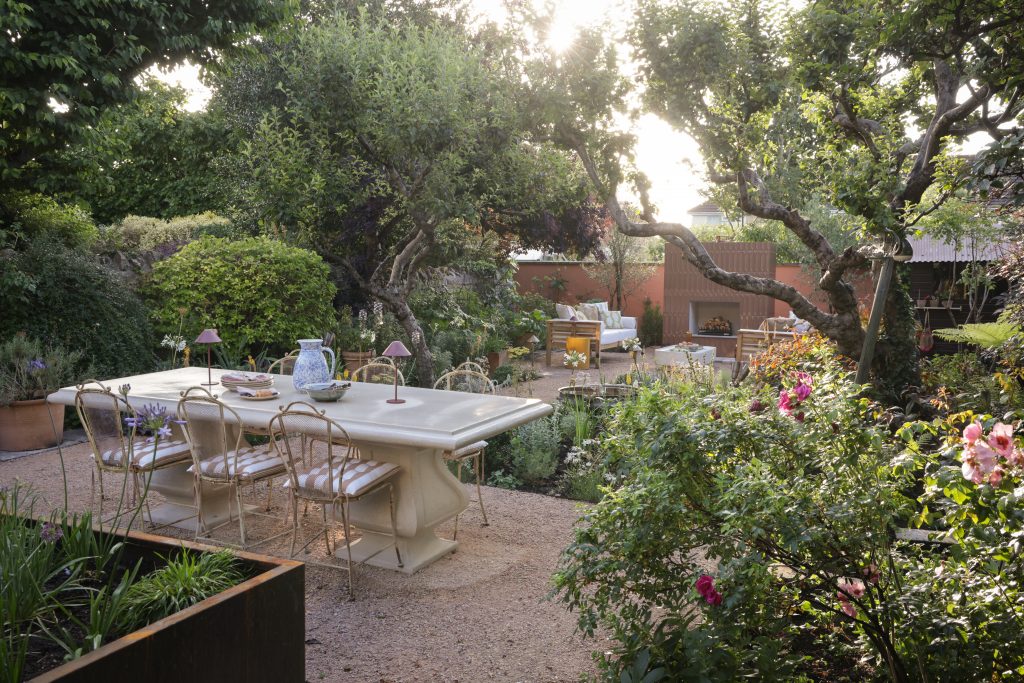
“By carrying colours and textures across both settings,” the studio explains, “the garden becomes a natural extension of the interior – full of character and distinctly personal.” These connections, they’re keen to point out, are often subtle. A tone that echoes from a kitchen wall to an outdoor planter. A material that reappears underfoot on the terrace. Small decisions, made with intention, that collectively dissolve the line between inside and out.
We asked Woodhouse & Law to share their five essential tips for bringing the indoors outside – and the principles are more achievable than you might think.
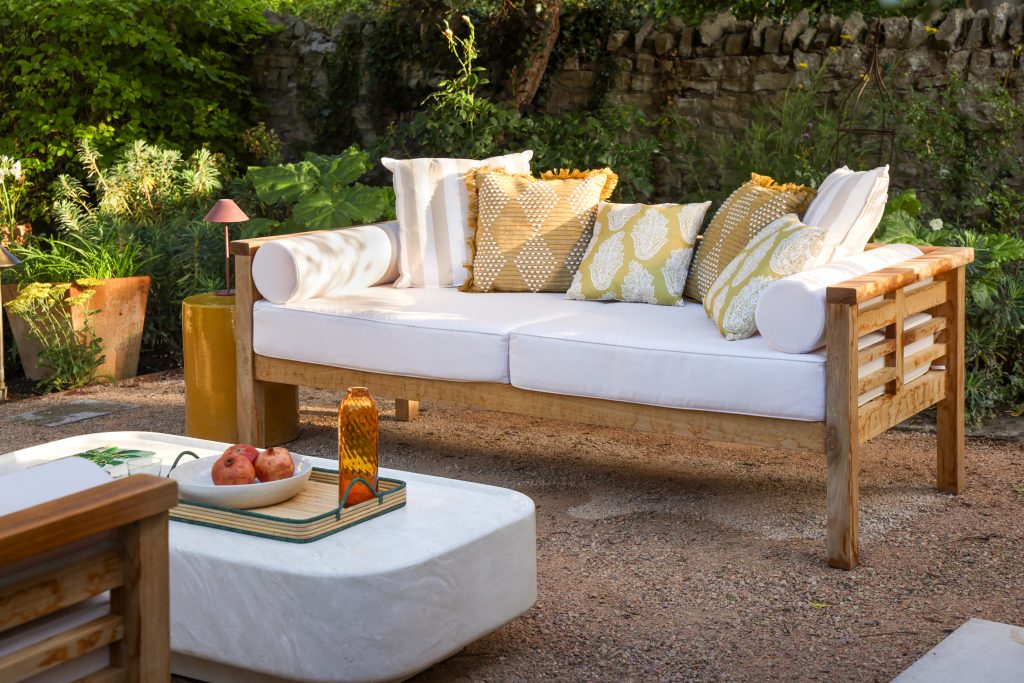
1. Start with one unified palette
It sounds simple, but it’s where most people go wrong, choosing the garden separately from the interior, as if the two don’t need to speak to each other. Woodhouse & Law’s approach begins with a single colour story that moves fluidly between both spaces. That doesn’t mean everything has to match (please, not everything has to match), but there should be a thread, a tone, a temperature, a recurring shade, that ties the whole picture together.
2. Think in ‘rooms’, even in the garden
The outside of your home deserves the same considered zoning as the inside. Just as you’d think about how a hallway flows into a sitting room, think about how different areas of your garden serve different moods and purposes. A seating area for morning coffee. A wilder, planting-rich corner for atmosphere. A dining space that feels defined and intentional. Give each area its own identity, and the whole garden begins to feel less like open space and more like a place to actually live in.
3. Repeat key materials or finishes
One of the quietest but most effective tricks in the Woodhouse & Law toolkit is material repetition. If you have limestone inside, echo it in an outdoor step or surface. If your kitchen has brushed brass fittings, carry that finish into the garden with lanterns or outdoor hardware. These threads of continuity don’t shout, they hum, creating a coherence that you feel before you can quite name it.
4. Introduce soft furnishings outdoors
The garden has long been treated as a purely practical space, plants, paving, perhaps a table and chairs if you’re lucky. But soft furnishings change everything. A weather-resistant cushion in the right shade, a quality outdoor rug that anchors a seating area, a throw draped over a garden chair on a cool evening. These aren’t luxuries. They’re the details that make a space feel genuinely lived in, rather than staged for occasional use.
5. Layer lighting for atmosphere, not just function
Functional outdoor lighting, the security light, the path illumination, has its place. But it’s the layering that transforms a garden after dark. Low-level planting lights. A lantern on a table. Candles in a sheltered corner. Woodhouse & Law approach outdoor lighting with the same care they’d apply to an interior scheme, because the garden at dusk has its own magic, and the right light knows how to find it.
About Woodhouse & Law
Woodhouse & Law is a multidisciplinary design studio with a shared vision that feels quietly radical: that a home and its garden should always be designed as one. Nick Woodhouse trained at the English Gardening School in Chelsea and is an RHS-qualified plantsman, bringing deep horticultural knowledge to a practice that spans residential and commercial projects across the UK and Mallorca. John Law trained as an interior designer at Ivy House Design School, graduating with distinction, after an earlier career in advertising and design, and has worked on high-end projects across both sectors.
Together, they offer a fully integrated service that treats every project as a unified whole. The result is homes that feel complete in a way you can’t always articulate, but always, unmistakably, feel.