There is something quietly radical about the idea of bringing a National Trust property into your kitchen. Not as a replica or a pastiche, but as a genuine distillation of the textures, proportions and character that make Britain's great historic houses so enduringly captivating. That is precisely the ambition behind National Trust Kitchens by Symphony — the conservation charity's first-ever fitted kitchen collaboration, and a meeting of two names with deep roots in British craftsmanship.
Symphony, the largest privately owned fitted furniture manufacturer in the UK, and the National Trust, Europe's largest conservation charity, have come together around a shared belief: that quality should endure, in both style and conscience. The result is a debut collection that is at once beautifully referential and entirely liveable.
Eight Houses, Three Collections
The inspiration for the collection was drawn from eight remarkable National Trust properties: Attingham, Blickling, Coleton, Ham House, Erddig, Petworth, Standen and Uppark. Each carries its own architectural personality — whether the Regency grandeur of Attingham in Shropshire, the Jacobean drama of Blickling in Norfolk, or the Arts and Crafts warmth of Standen in West Sussex.
From these houses, three design categories have been developed — Kitchen Garden, Arts & Crafts and Country House — each reflecting the elegant proportions, rich textures and refined detailing found across centuries of domestic British architecture, reimagined for the way we actually live today.
Order, Abundance and the Walled Garden
The Kitchen Garden collection takes its cue from the meticulously planned productive gardens that sat at the heart of every great country estate. There is a satisfying logic to these designs — structured, symmetrical, purposeful — that mirrors the clean lines and considered organisation of the kitchen gardens that inspired them.
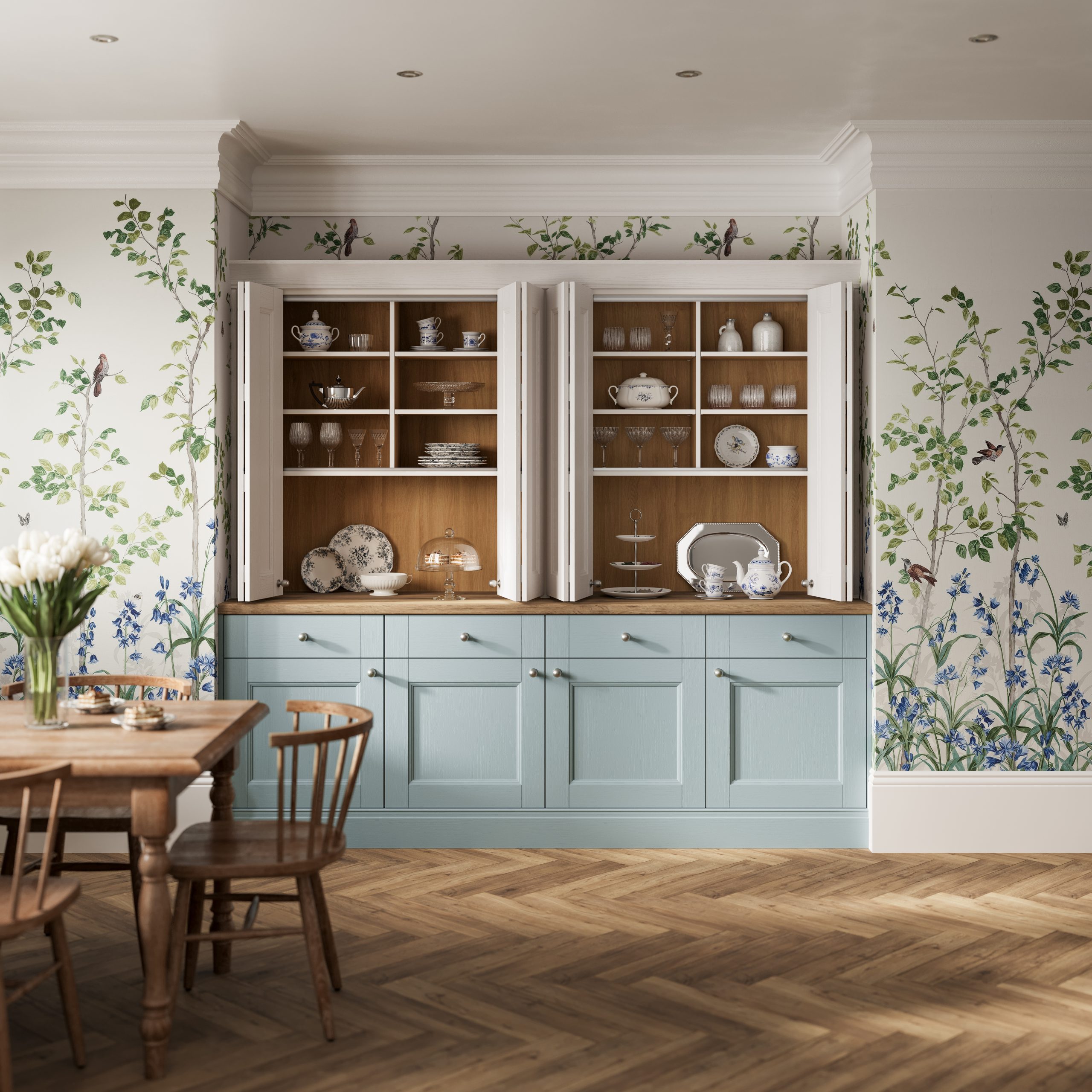
The Blickling
Taking its name from Blickling Estate in Norfolk, this design is conceived as the natural hub of the home. The structured borders and pathways that define a traditional walled kitchen garden find their echo in the clean lines and quiet symmetry of the cabinetry — ordered, elegant, and thoroughly practical.
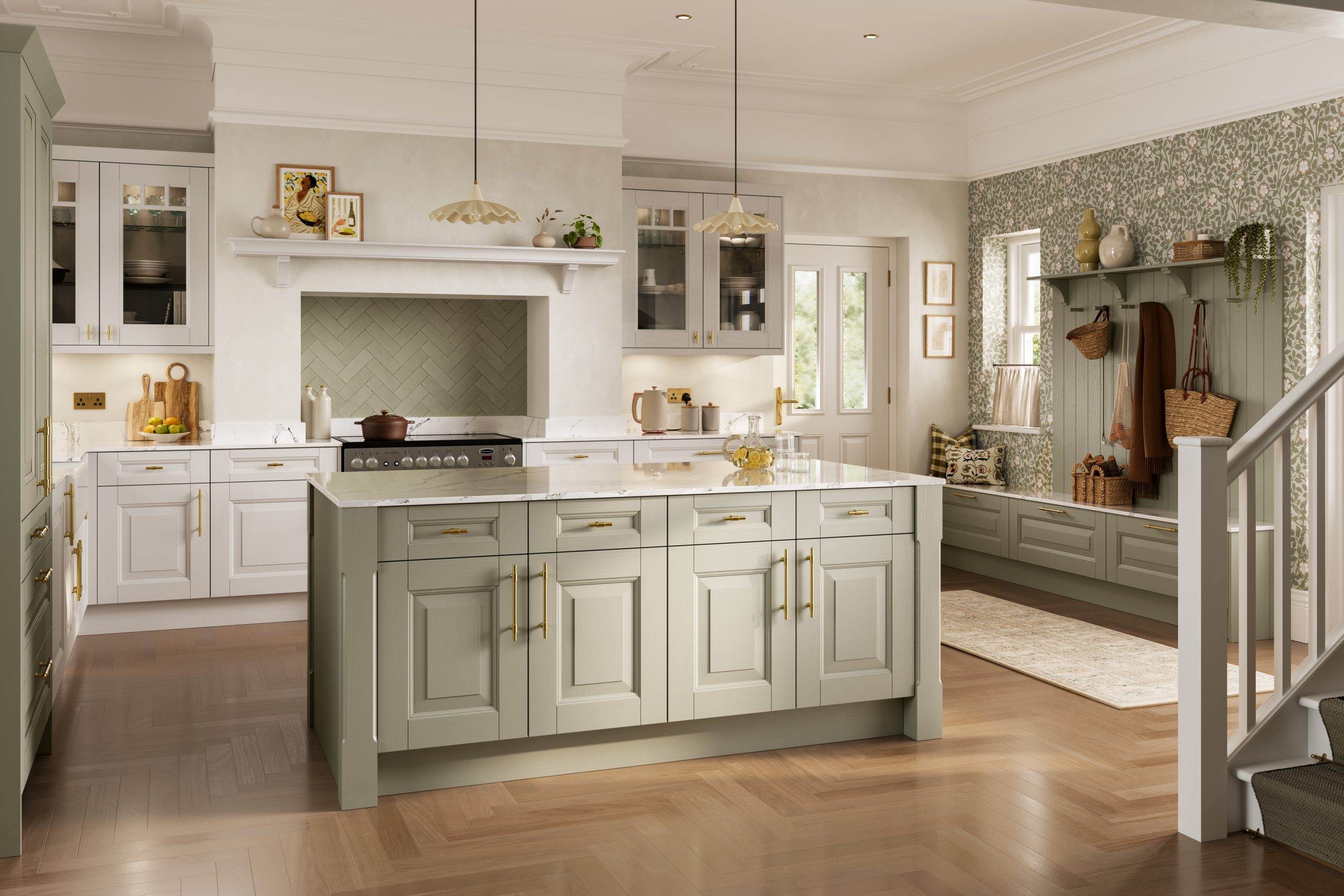
The Dysart
Inspired by the grand architecture and extensive kitchen gardens of Ham House in Richmond, The Dysart is the more ornate of the pair — softened by natural colours and the warm gleam of polished brass handles. Glazed cabinetry, generous island storage and decorative detailing create a kitchen that feels curated rather than composed.
Honest Materials, Quiet Beauty
The Arts & Crafts movement believed that beautiful things should also be useful, and that the people who made them mattered as much as the objects themselves. It is a philosophy that sits comfortably alongside Symphony's own values — and it shapes this collection with a warmth and integrity that feels altogether contemporary.
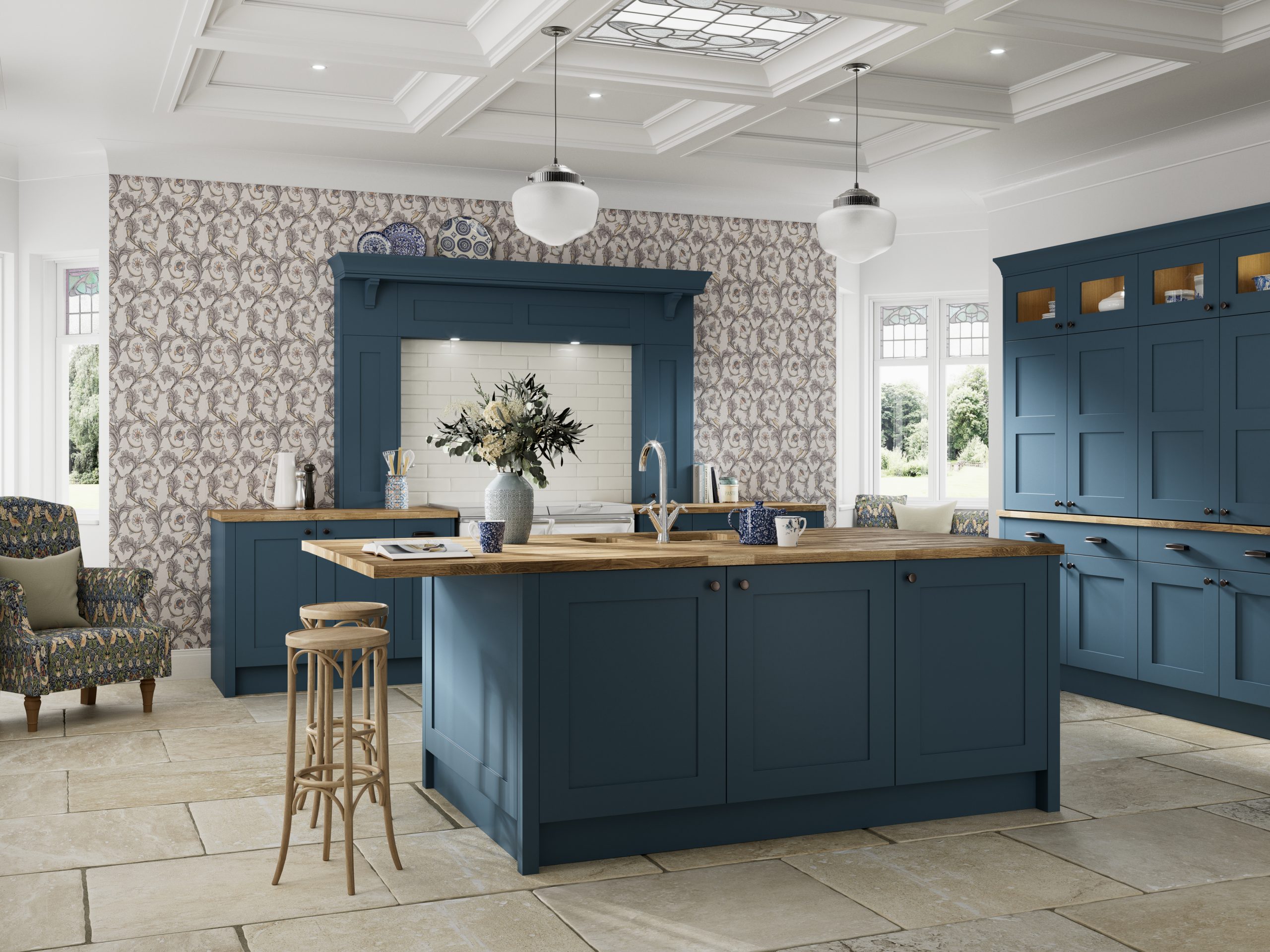
The Standen
Named after Standen House in West Sussex — one of the National Trust's finest Arts and Crafts properties — The Standen offers a beautifully modern reading of classic design. Its smooth shaker style is clean and unfussy, at home in both a period cottage and a new-build extension, and it carries that rare quality of looking right in almost any room.
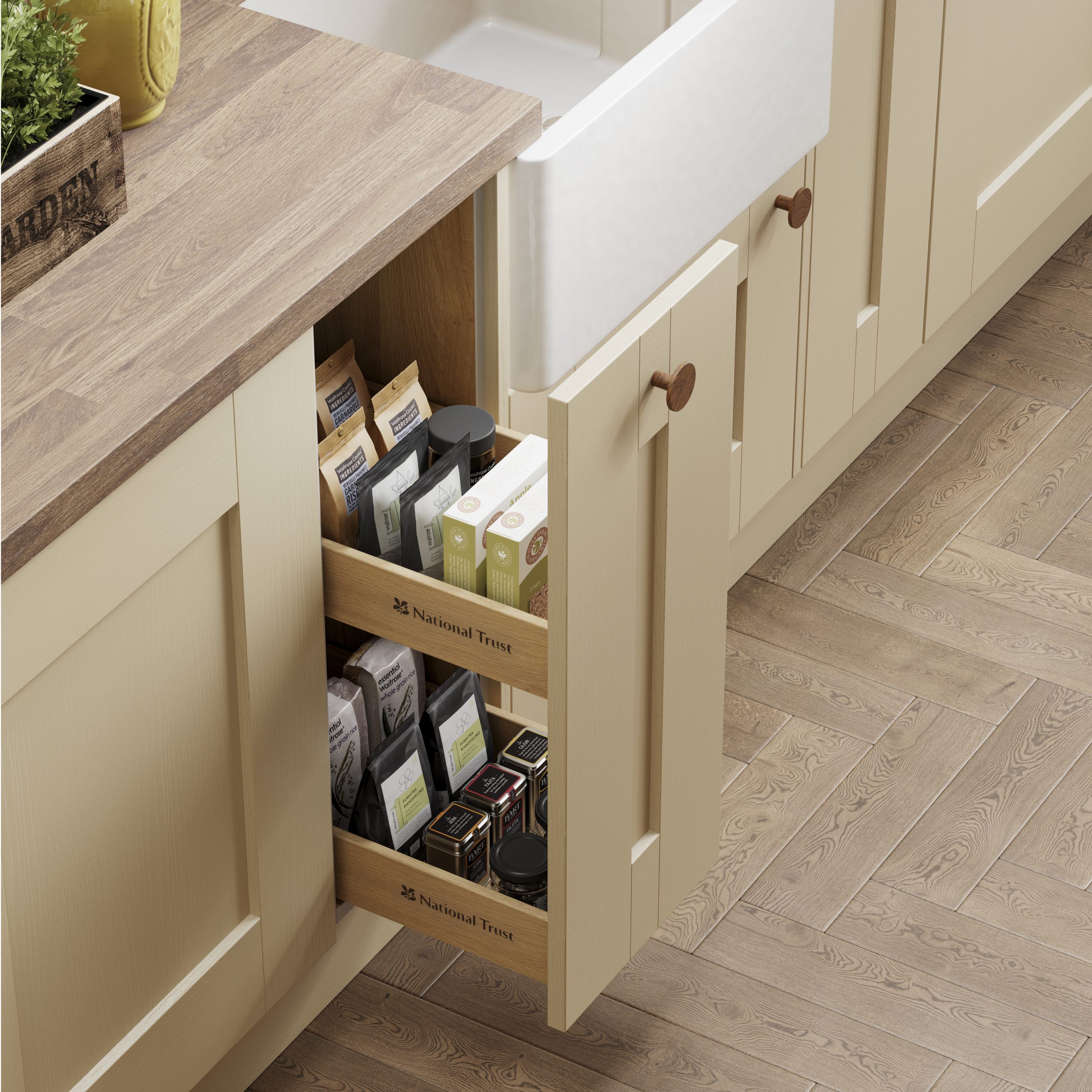
The Coleton
Smart and deeply homely, The Coleton speaks the language of simple functionality — the founding principle of the Arts and Crafts movement. FSC®-certified timber handles deepen the connection to the natural world, complemented beautifully by open shelving dressed with traditional crockery and everyday utensils. A soft, natural palette ties everything together.
The Art of Timeless Living
The Country House collection is perhaps the most expansive of the three — drawing on the full sweep of British domestic architecture, from Georgian symmetry to the quiet refinement of the late 17th century. These are kitchens designed for proper living: generous, considered, and made to last.
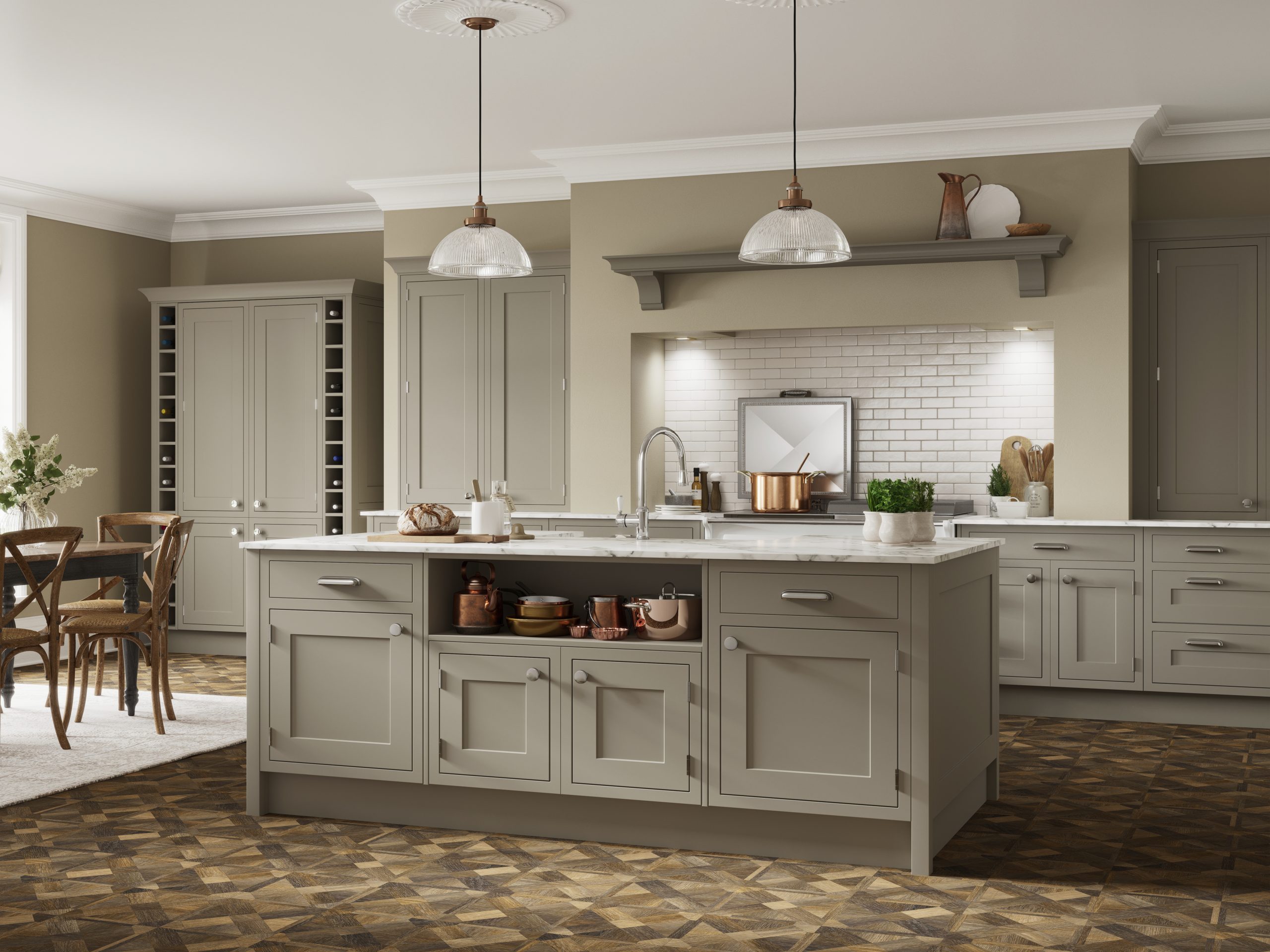
The Leconfield
Petworth House in West Sussex — one of the National Trust's most celebrated properties — lends its spirit to The Leconfield. Bespoke engraved timber cutlery drawers add a layer of considered detail that elevates the everyday, while a luxury bar pantry offers elegant storage for a wine collection. Warm Clay hues and finely crafted timber create a kitchen of quiet, enduring confidence.
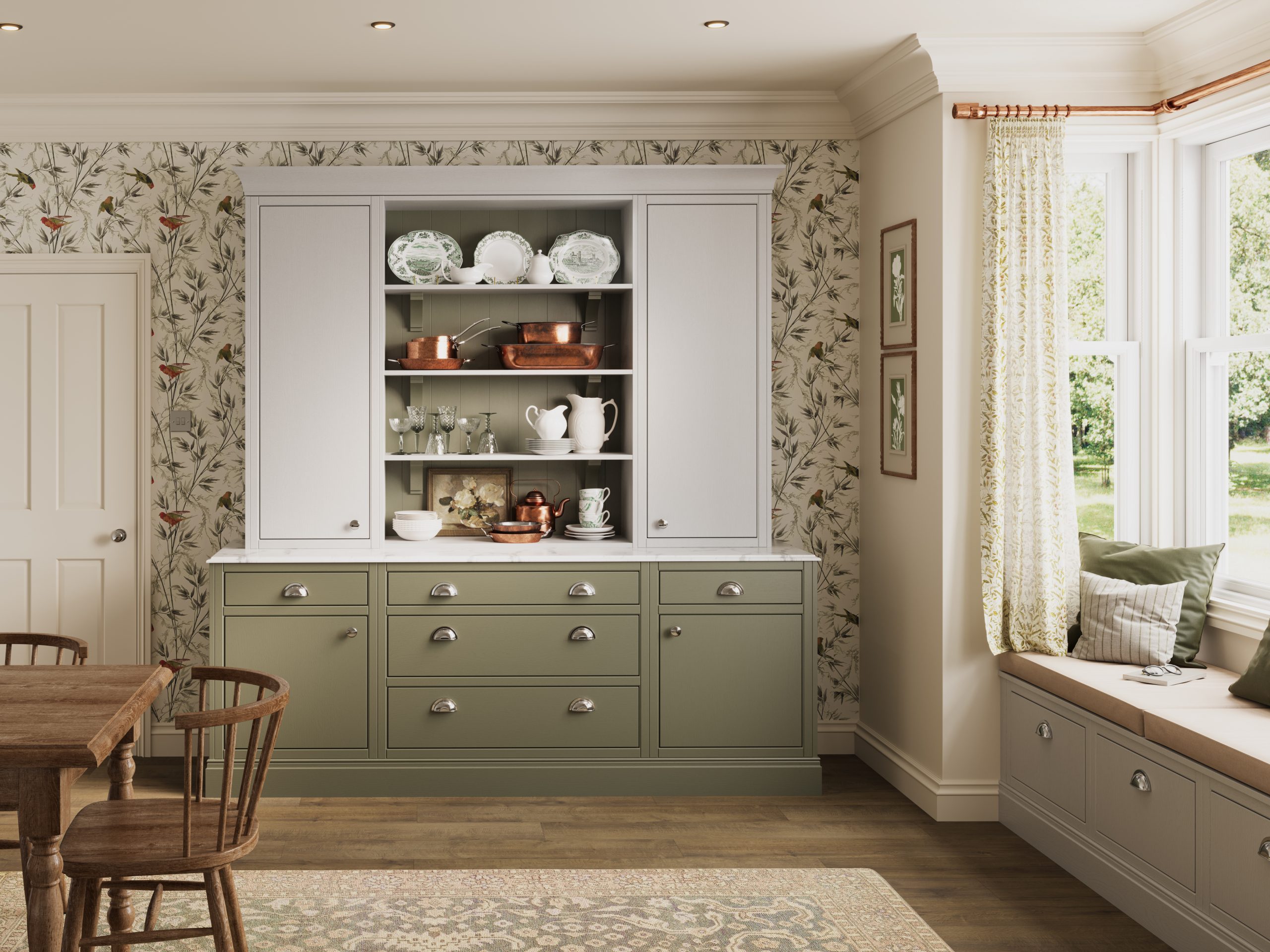
The Attingham
The structure, symmetry and proportion of Georgian architecture — so perfectly realised at Attingham Park in Shropshire — give this design its distinctive character. Smooth slab-style doors and simple handles keep the aesthetic open and uncluttered, while muted greens and soft blues bring the kind of warmth that no amount of ornament can manufacture.
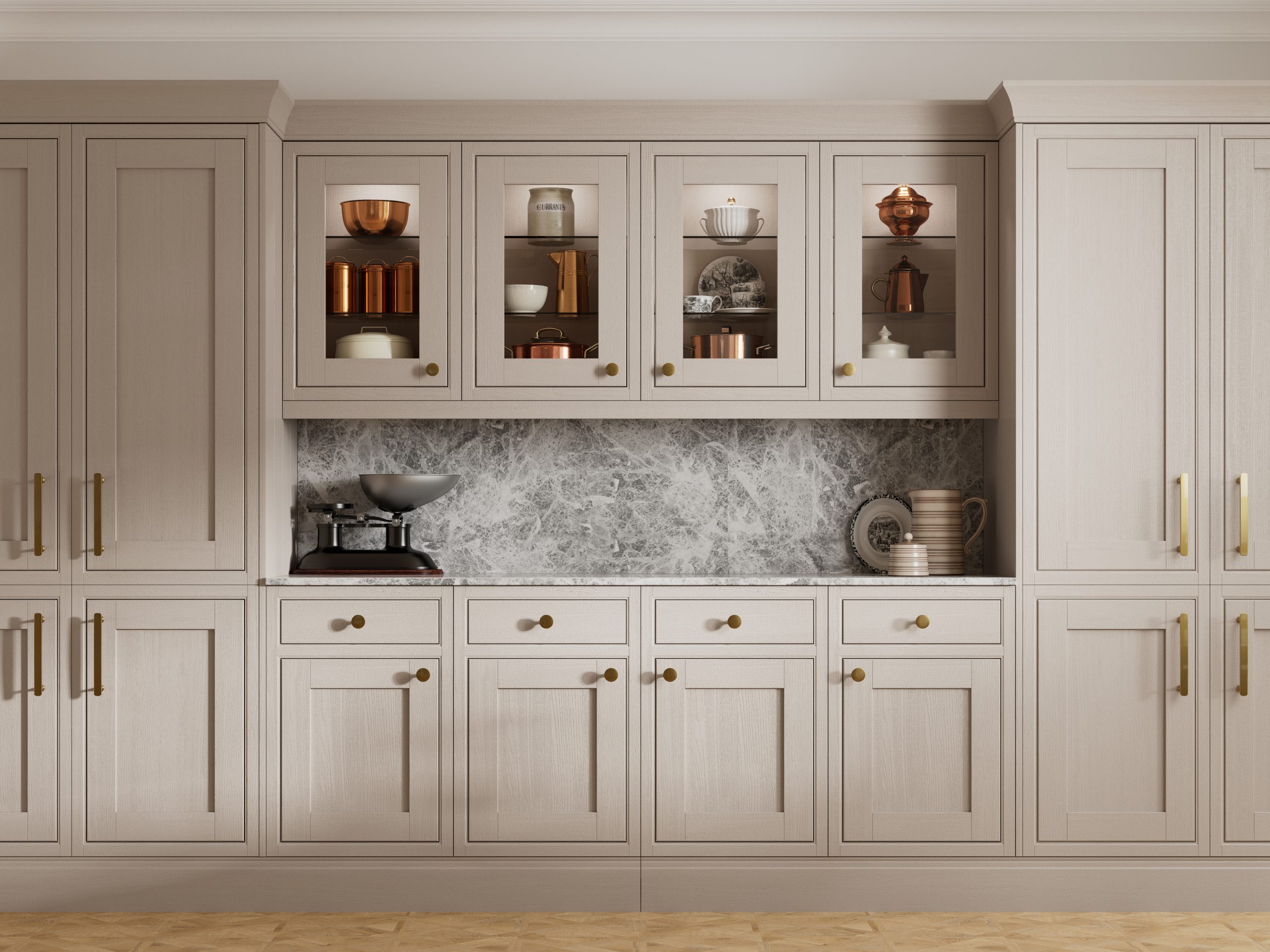
The Uppark
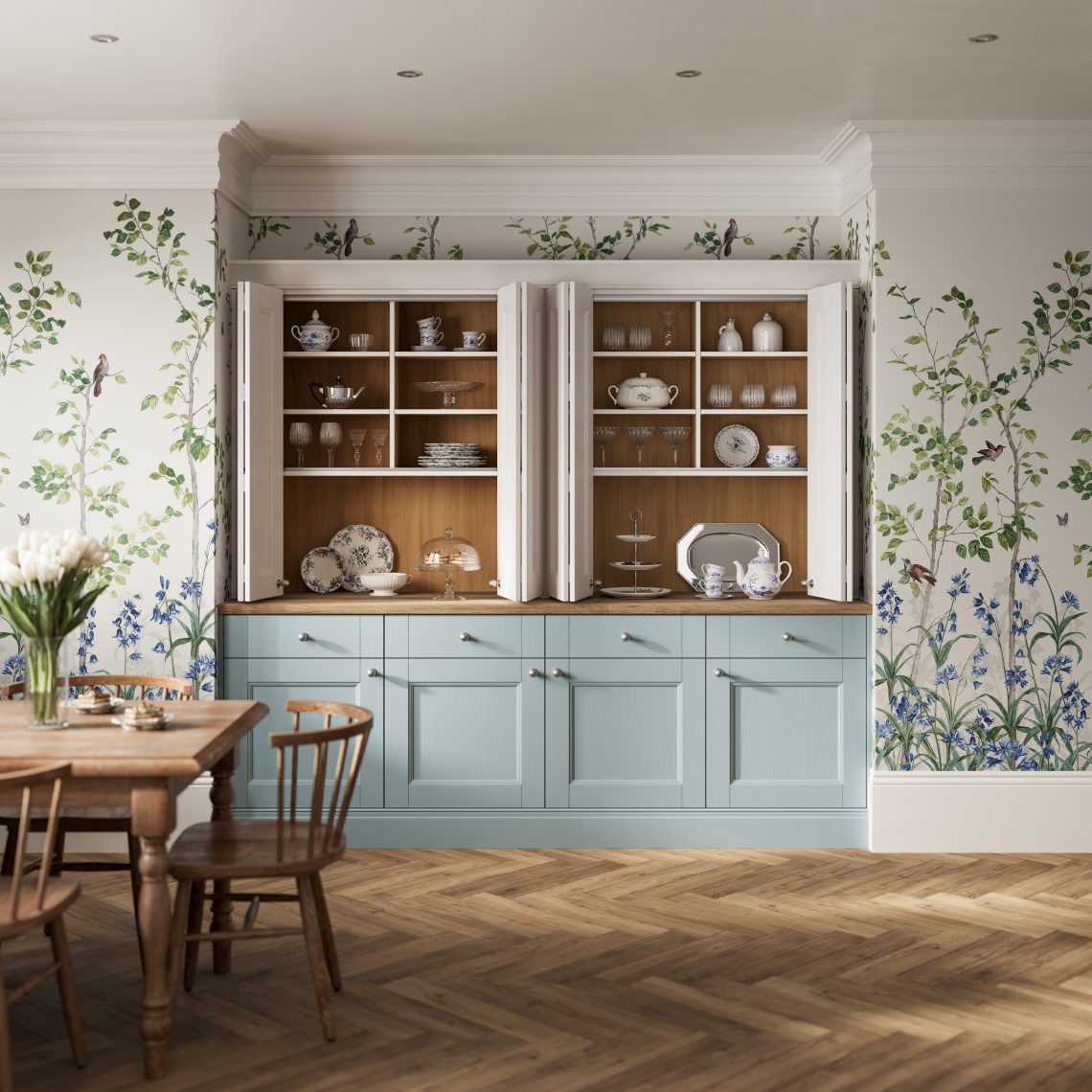
Inspired by the tranquil seventeenth-century Uppark House in West Sussex, this is a kitchen of elegant restraint — crafted in finely made in-frame timber and designed to function as beautifully as it looks. Generous pan drawers, crockery storage and bi-fold dresser cabinets ensure that nothing is sacrificed to style.
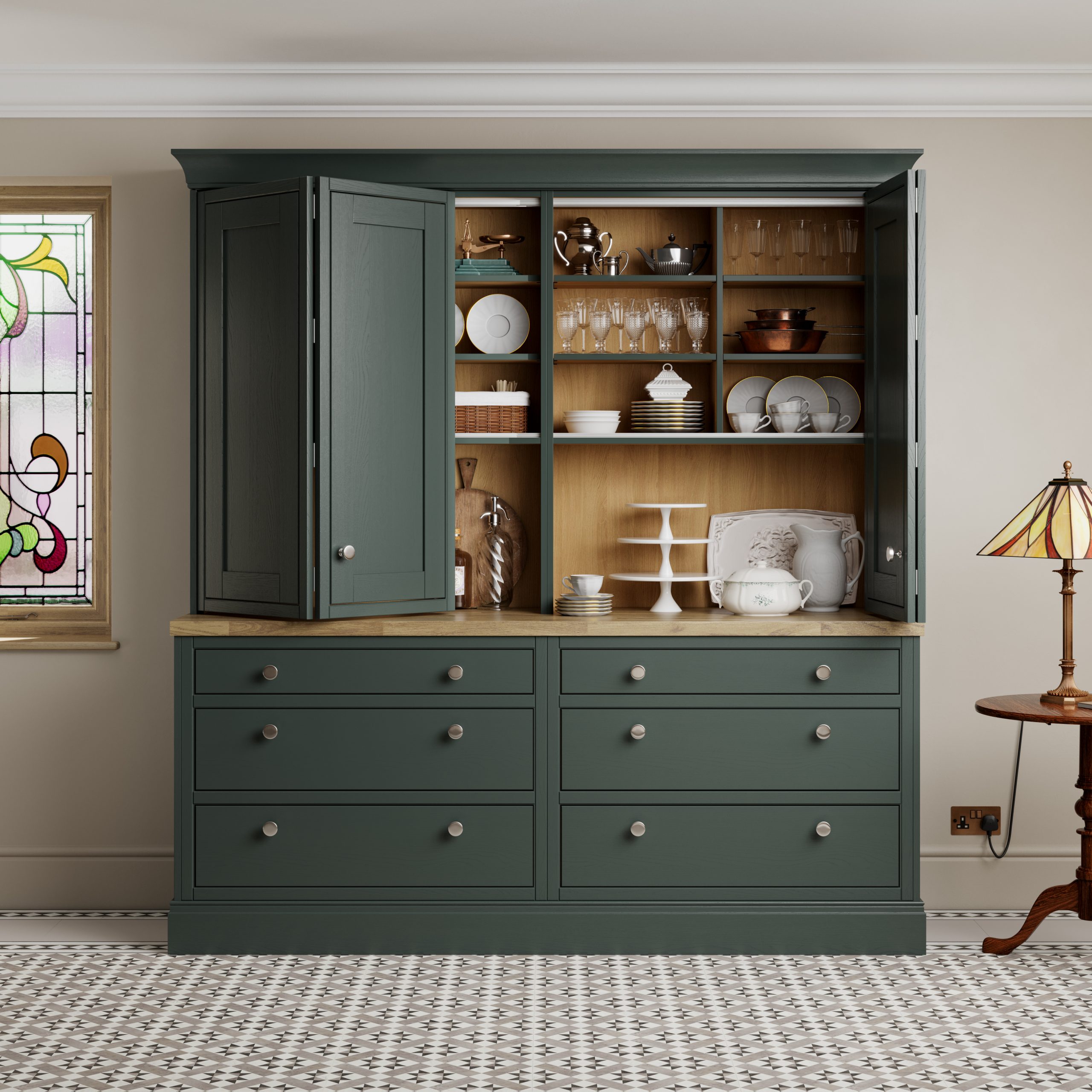
The Erddig
Erddig Hall in Wales is known for its peaceful, unhurried character — and The Erddig carries that quality into the kitchen. Refined shaker-style details create a simple yet sophisticated aesthetic that suits a country cottage as readily as a contemporary home. Large open shelves invite the display of treasured pieces; oak-finished drawer accessories keep everything else beautifully in order.
"Together, we've created a series of kitchen designs inspired by the character of the historic places we care for, whilst ensuring they're made responsibly, with materials and practices that respect the landscapes that inspire them."
Becky Standford, Head of Brand Licensing, National TrustSustainability Woven In
The collection goes beyond aesthetics in its commitment to responsible production. The ranges use environmentally friendly, water-based paints, and the cabinetry itself contains 74% recycled content — a meaningful figure that reflects genuine ambition rather than token gestures towards sustainability. Timber used throughout is responsibly sourced, and every kitchen carries the distinctive Oak Leaf mark: an instantly recognisable symbol of the National Trust's mission, and a reminder that what endures is worth protecting.
"We're proud to be collaborating with the National Trust on this truly unique collection," says Robert Newton, Head of Marketing at Symphony. "Together, we've created kitchens that combine the craftsmanship and character of Britain's heritage homes with the practicality and performance that today's customers expect — all while supporting the conservation work that keeps our shared history alive."
Supporting British Landscapes
Sales from this collaboration will directly fund woodland management projects, including work at Hardcastle Crags in West Yorkshire — Symphony's local National Trust site — with a minimum of £50,000 committed to the conservation of the natural landscapes that inspired the collection.
It is a sentiment that captures something broader about why this collaboration resonates. At a time when so much of what we buy is designed to be replaced, there is genuine comfort in the idea of a kitchen built to last — in materials, in style, and in its relationship to the landscape and history that shaped it. National Trust Kitchens by Symphony invites you to bring that sense of enduring beauty home.
Kitchens start from £9,500. For stockist information visitsymphonygroup.co.uk/nationaltrust