A rug can take a woman in the Middle Atlas three months to weave. In a market a few hours away it can sit next to a machine-made copy, and sell for the same price. Sandra Flores has spent ten years working on markets that fail skilled people. Her new London house, The Fourth Cat, is built to fix that one.
Launched this week and online now at thefourthcat.co.uk, The Fourth Cat sells one-of-a-kind rugs and ceramics made by master weavers and potters in Morocco and Tunisia. Every piece comes with a record of who made it, where, how and from what. The prices reflect the time and skill that went into the piece.
It's an interiors brand with an unusual starting point. Flores didn't come from design. She came from development finance.
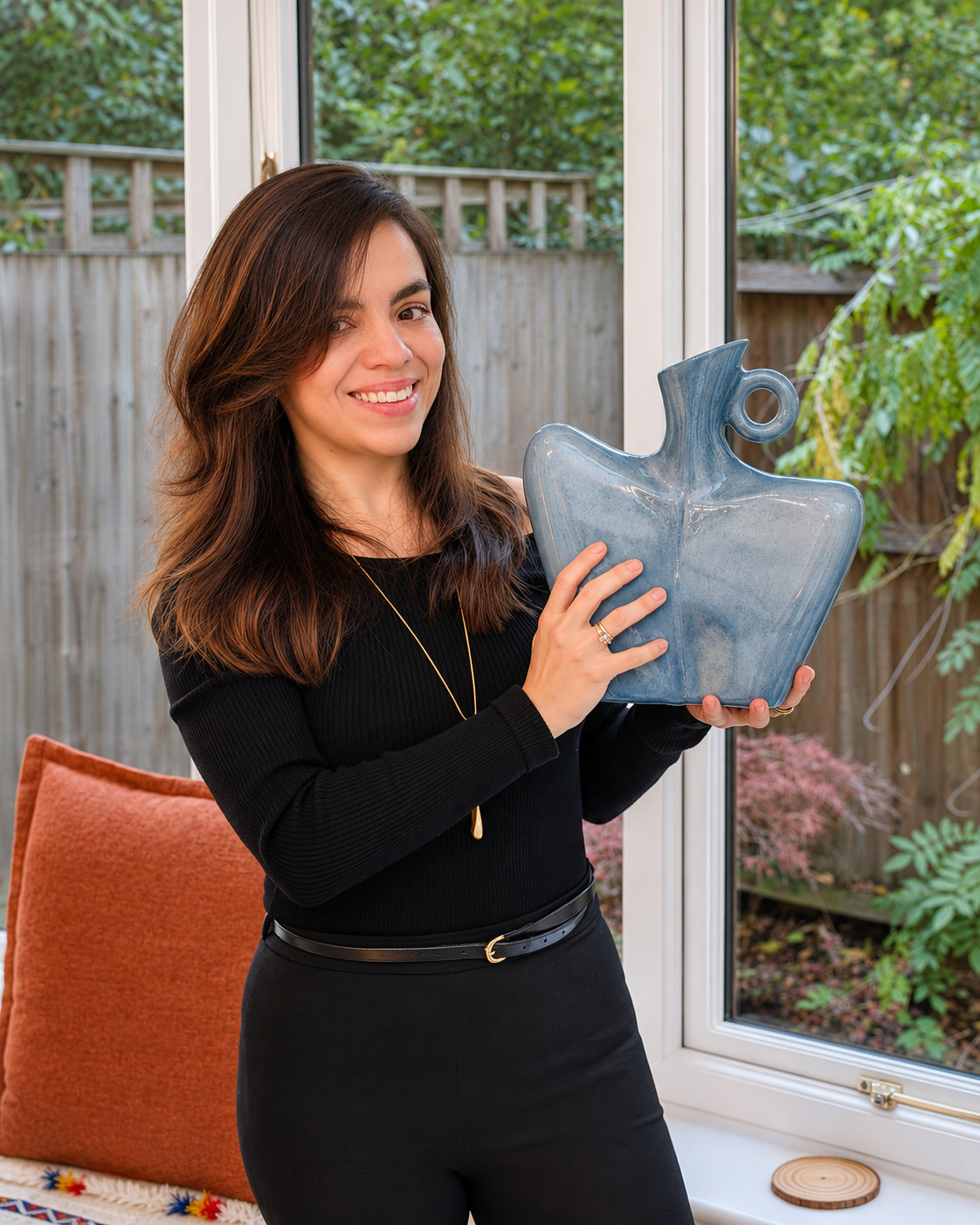
From development finance to the loom
Flores grew up in Mexico, holds a Master of Public Policy from the University of Oxford, and spent a decade at IFC, the private-sector investment arm of the World Bank Group. Her work there was about getting finance to the people traditional banks overlook: small business owners in Mexico and Central America, refugee-hosting communities in northern Kenya, and families displaced by war in Eastern Europe.
Morocco was her last posting, and she says it showed her the clearest example she had seen of a problem she already knew well. "Craft doesn't have a talent problem. It has a market problem," she says. At IFC she had spent years working on the gap between economic potential and economic opportunity, and in Morocco she found the same gap in another form: extraordinary skill and months of work, sold into a market that doesn't always reward either. She left IFC in 2025 to found The Fourth Cat, and she wants to start, she says, "with how we recognise and establish the value of a piece."
The trouble with "handmade"
Anyone who has shopped for a rug will know the problem. "Handmade" is printed on almost everything, and buyers have almost no way of checking it. Put two rugs that look the same side by side, one knotted by hand over three months and one turned out in an afternoon, and most of us couldn't tell them apart. So they sell for the same money.
The Fourth Cat argues that this is how traditional skills disappear. The work isn't paid properly, so fewer people can afford to keep doing it, and over time the skill is lost.
Working with the makers, not just buying from them
The model is slow by design. Flores works with a small number of cooperatives, studios and family workshops, and she keeps going back. She learns the craft and its economics before she asks anyone to change anything.
When pieces are developed together, the changes are practical ones. A rug might be resized to suit the proportions of a London room, or a glaze cooled by two shades. One form was drawn in one village and finished in another. The brand says each collaboration respects the maker's own creative identity and expertise.
Each piece is then measured, photographed and documented, and a share of every sale goes back to the makers.
The rugs: Mrirt and Fes
The first collection has fourteen pieces, and almost every one exists only once. The rugs show two very different traditions.
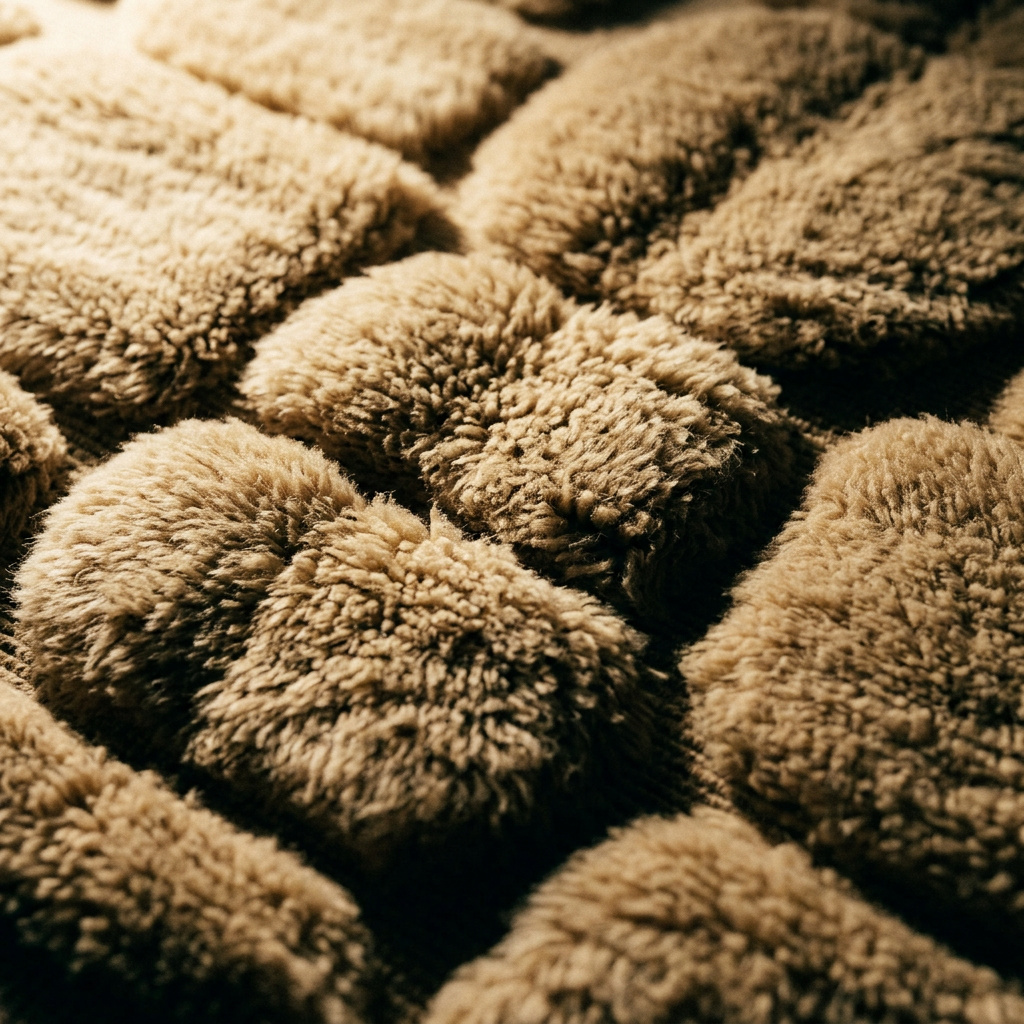
Sculptural Stone (£2,100) was hand-knotted in Mrirt, in the Middle Atlas. Its deep wool pile is cut into a raised grid of rounded cells, so the whole surface reads like low relief, in a colour somewhere between warm sand and camel. Most Amazigh rugs carry their meaning in symbols. This one carries it in its shape.
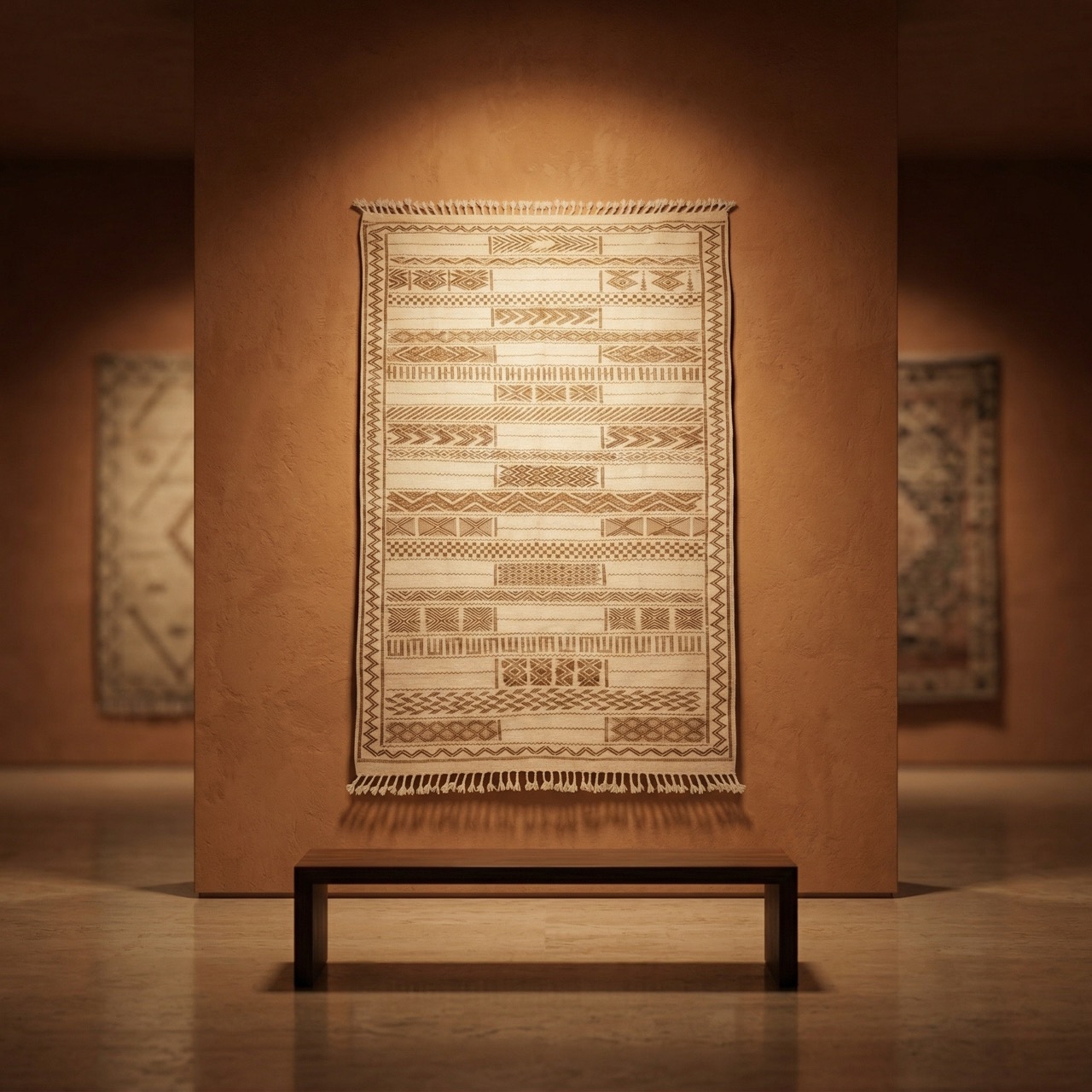
Verse (£2,450) does the opposite. It's a Hanbl flatweave from Fes, a dense weave made for rooms that get heavy use, and it's flat enough for a dining table to sit level on it. More than seven kilograms of wool go into its three metres. Undyed fleece from Ait Ouelmes is woven against yarn dyed terracotta with henna. The pattern uses the Amazigh visual language: diamonds for protection and fertility, crosses for balance, chevrons for direction, and combs for barley and wheat, a wish for plenty. With no pile to hide a wobbly line, every angle the weaver set from memory had to be exact.
The ceramics: Salé and Sejnane
Most of the ceramics come from a studio in Salé, on Morocco's Atlantic coast. The ceramicist there came to the craft through his father's link to the old Oulja pottery market, which no longer exists. The pieces are built slowly and often fired three times, so the colour builds up in layers.
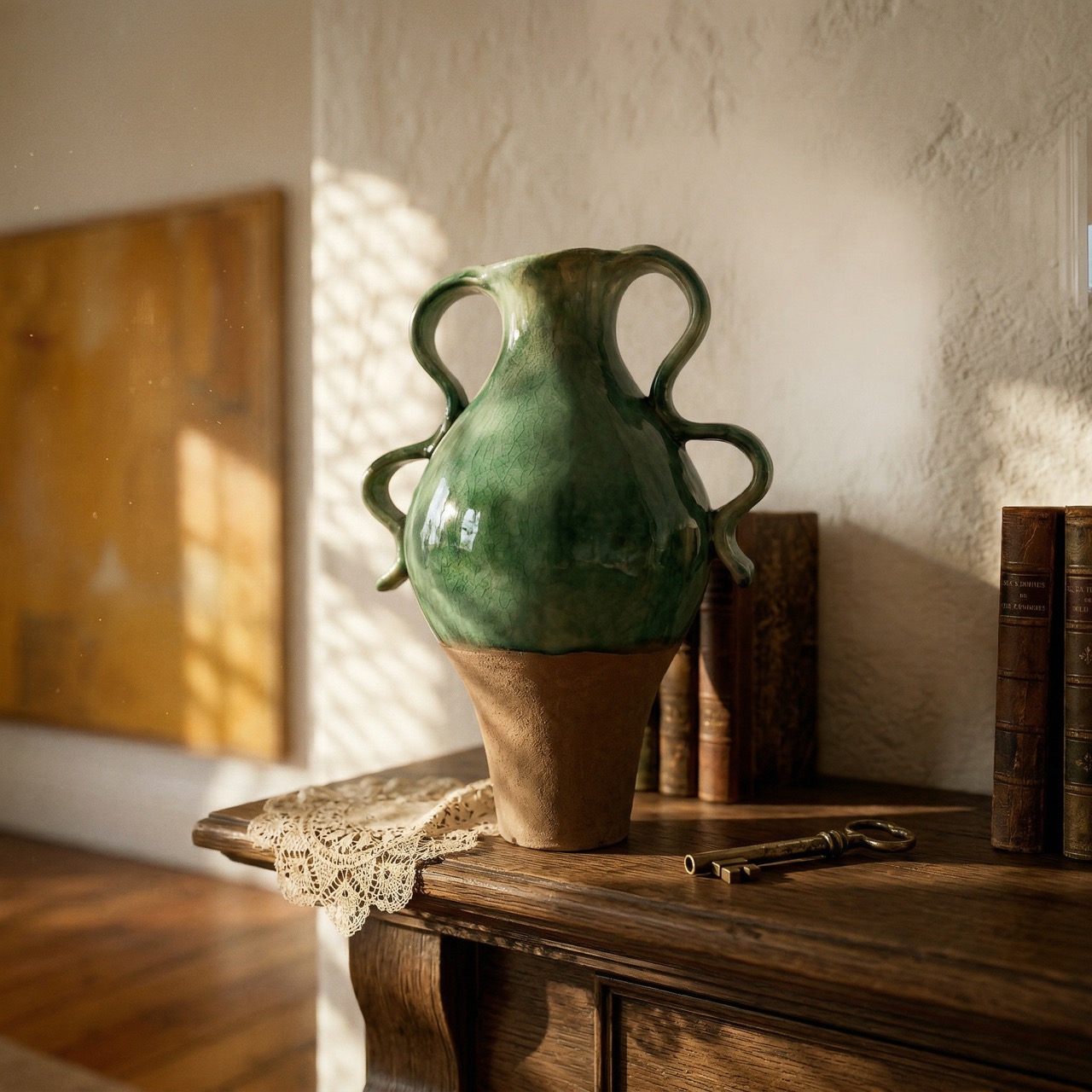
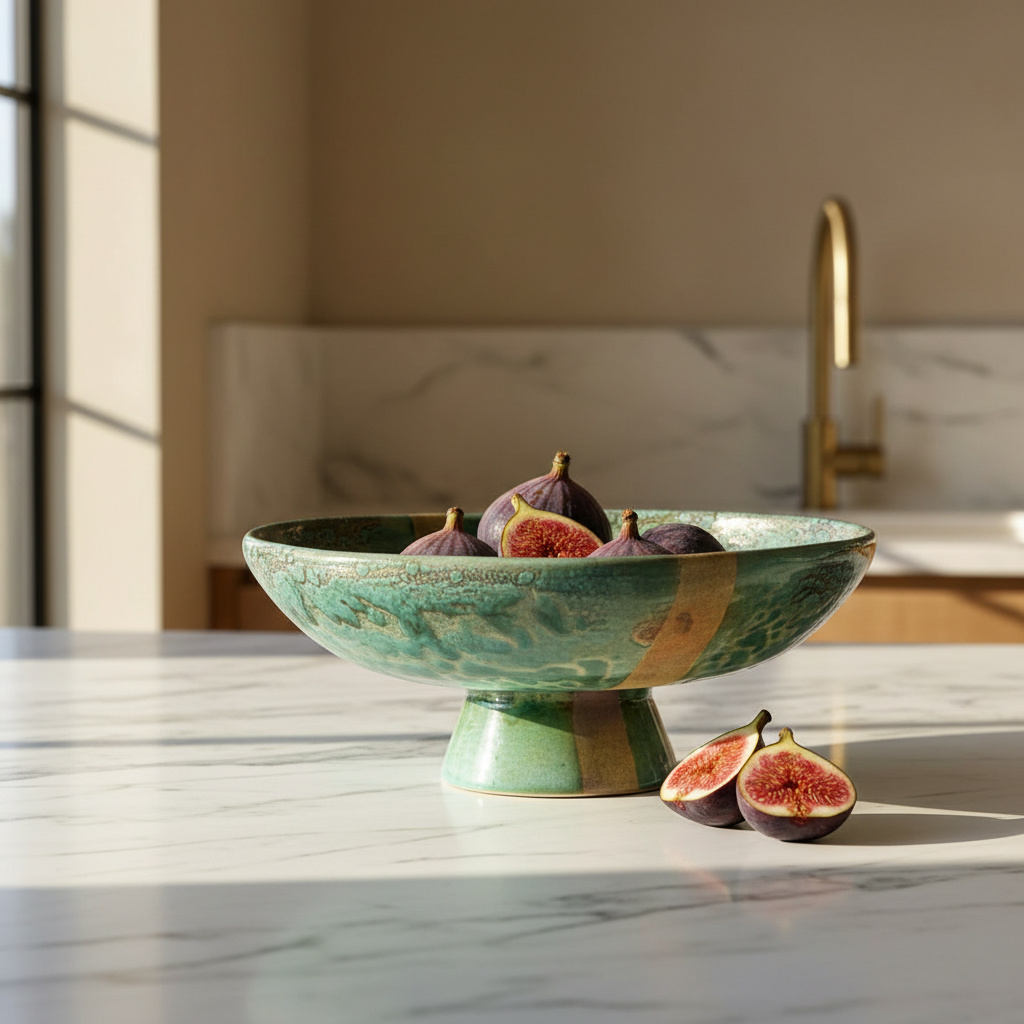
You can see it in Amphora Jade (£520). It's coiled by hand, with four handles shaped and joined by hand, and it rests for at least five days in a closed cupboard so the handles don't crack as it dries. Its green moves from near black at the foot to bright jade at the shoulder. Coupe Malachite (£310) is a low, wide bowl thrown on the wheel and set on a hand-rolled foot. Copper and manganese are worked into the crackle of its glaze until it shifts between green and bronze.
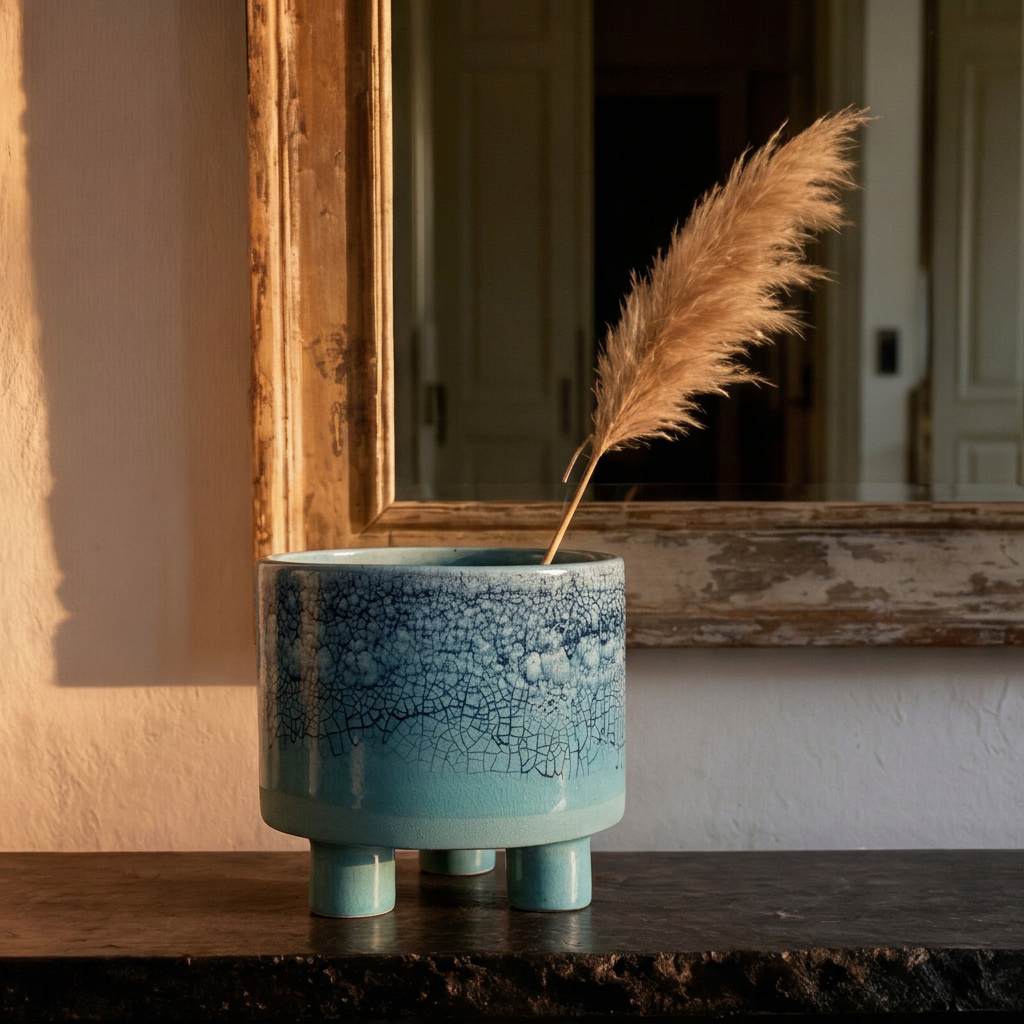
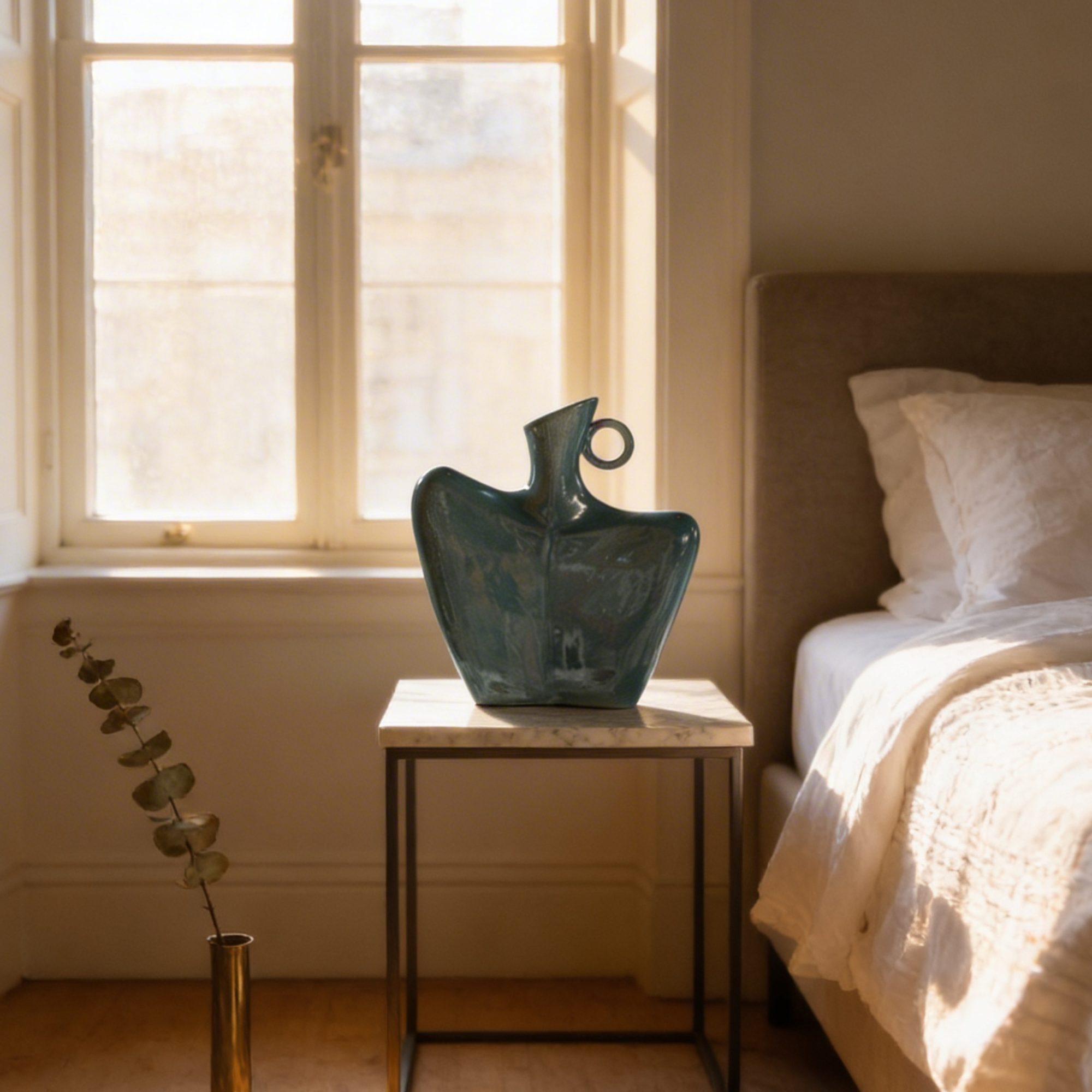
Vessel Ash & Celadon (£345) stands on three hand-rolled feet, so it seems to lift away from whatever it's standing on. Its cobalt crackle runs from clouded turquoise at the rim to pale blue at the base. Vessel Tide (£195) is slip-cast in a plaster mould that was carved by hand over many days. Its soft lines suggest a torso, and it's finished in a gradient of turquoise and cobalt.
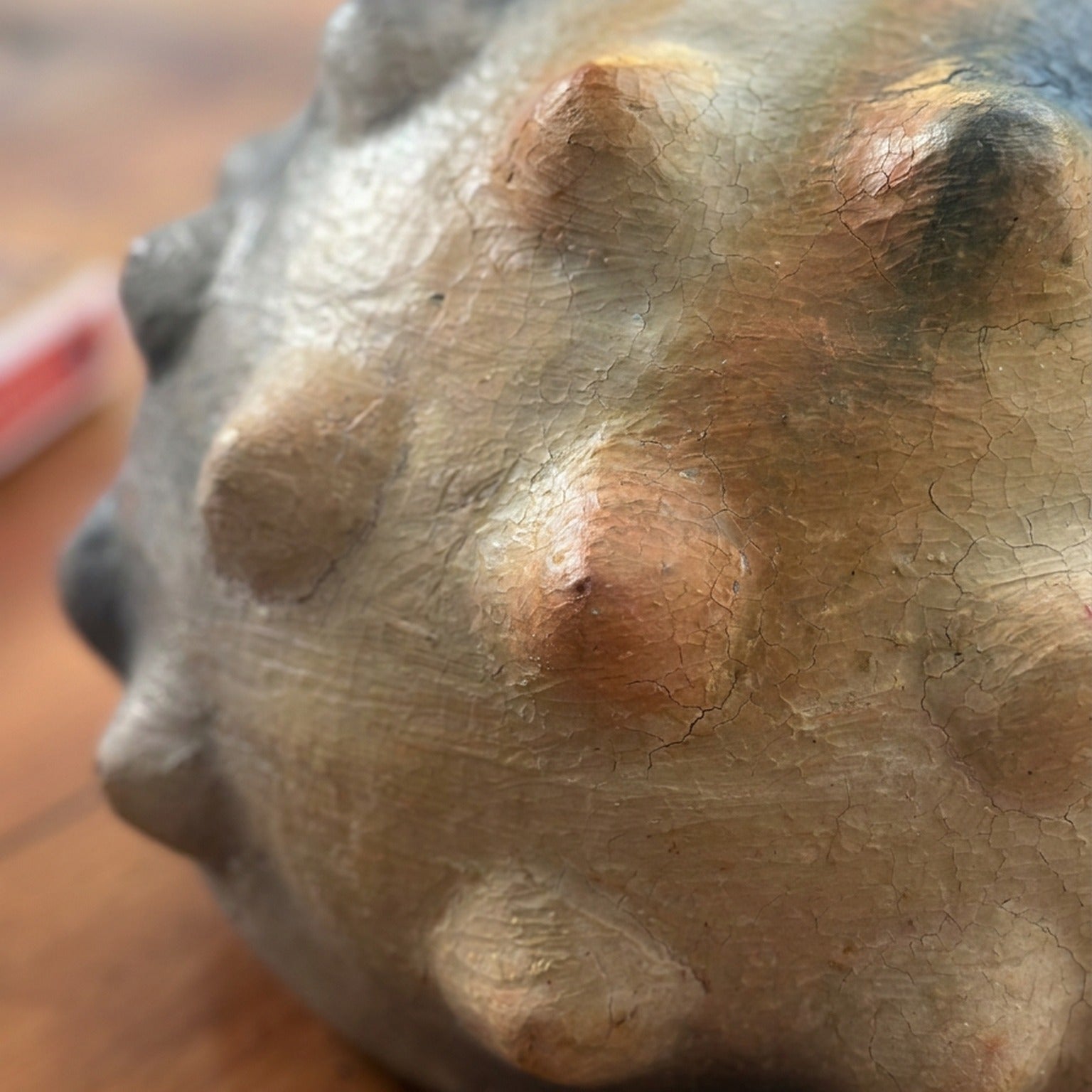
From northern Tunisia comes Ash Form (£180), made in Sejnane, where women's pottery was recognised by UNESCO as intangible cultural heritage in 2018. It's coiled without a wheel and fired in the open. Its low, round body is covered in raised points pinched from the clay one at a time, and the fire left it pale ash and stone with a drift of smoke-blue across one side.
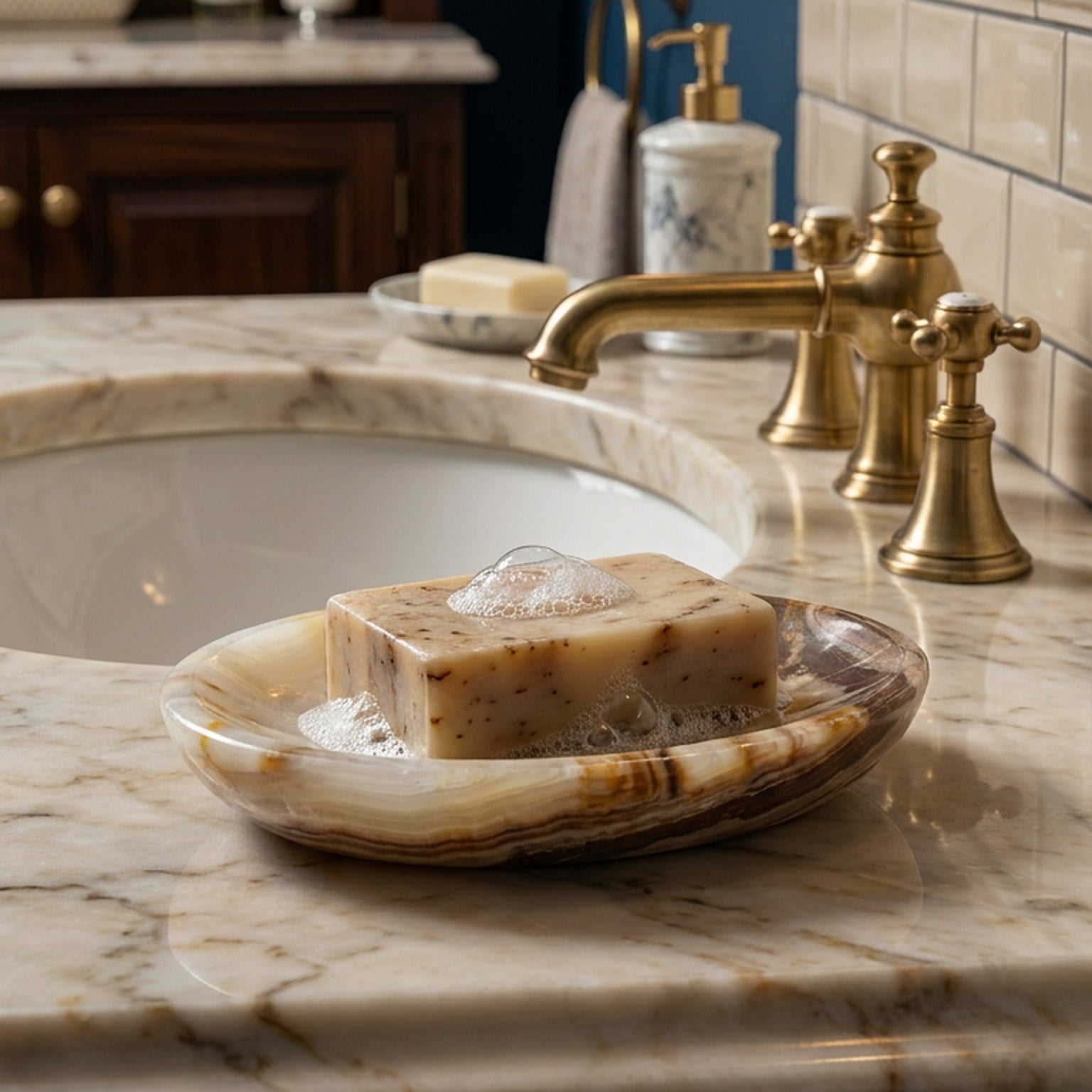
The smallest piece is also the most affordable way in. Dune Vein (£40) is a soap dish shaped and polished by hand from banded aragonite in Merzouga, at the edge of the Sahara. Its bands of sand, honey and white run differently through every stone, and only two were made.
A launch with a story to tell
The collection was first shown at a private preview in London on 19 November. Guest Estefanía Baltazar, who works in climate and infrastructure finance, said she arrived expecting beautiful rugs and ceramics but left thinking about how little most of us know about the people who make the things in our homes.
For designers and architects
The Fourth Cat is also working with interior designers, architects and stylists from day one, and for them a piece that exists only once is a selling point. The trade service includes holding pieces while a client decides and developing commissions to brief with the workshops. Commissions need two to three months on the loom. Each piece also comes with a written record for the client file. Trade enquiries go to hello@thefourthcat.co.uk.
What comes next
Morocco and Tunisia are only the start. Flores has built the model to travel to other countries and other crafts, wherever there's exceptional work that the market can't yet see. "Wherever the work is exceptional," she says, "there should be a way through."
Living with one-of-a-kind pieces
- Let the rug lead. A hand-knotted pile rug is a room's anchor. Choose it before the sofa and pull your colours from it, not the other way round.
- Keep henna out of the sun. Natural dyes like the henna in Verse soften in long direct sunlight. Rotate the rug now and then, and vacuum gently.
- Group ceramics in odd numbers. Three pieces of different heights on a shelf or sideboard look collected rather than arranged.
- Display, don't fill. Most of these vessels are decorative only. Open-fired Sejnane clay stays porous, so keep it dry and dust it with a soft cloth.
The details
The Fourth Cat collection is available now at thefourthcat.co.uk. Prices from £40 to £2,750, with free UK delivery. Pieces held in the UK usually arrive within 10 to 15 days. Trade and commission enquiries: hello@thefourthcat.co.uk or thefourthcat.co.uk/pages/contact.
Will a one-of-a-kind piece be coming home with you? Tell us on Instagram with #annelouisemag
All images courtesy of The Fourth Cat
The Anne Louise Letter
Enjoyed this? There's more where it came from.
One email a week with the best of fashion, home, food and living. No spam, unsubscribe any time.